

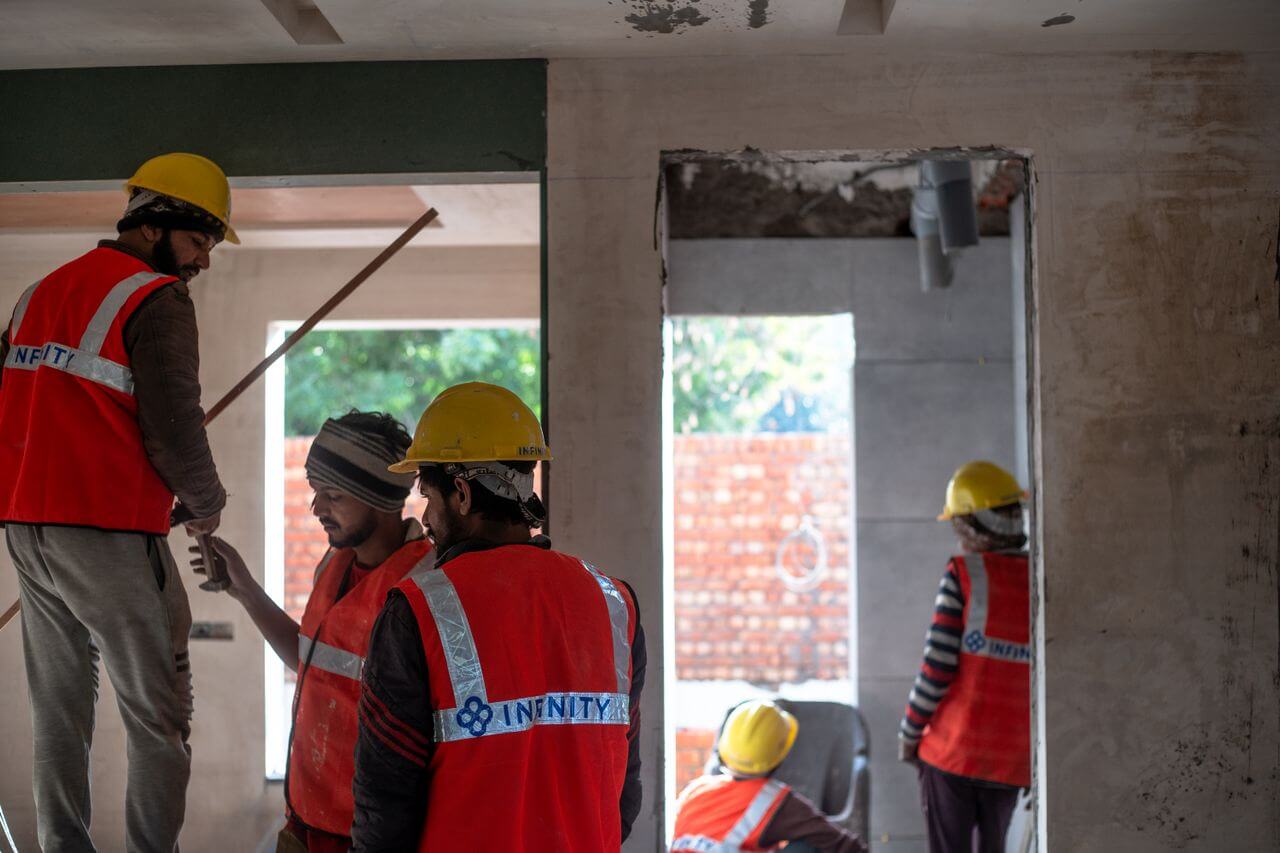
onstruction workers in the USA must wear safety workwear and personal protective equipment (PPE) when workplace hazards make it necessary.
Under OSHA’s construction rules, employers must provide PPE that is safe, properly maintained, and correctly fitted for the worker. Depending on the job, this can include hard hats, safety glasses, protective footwear, high-visibility clothing, gloves, hearing protection, respiratory protection, and flame-resistant or arc-rated clothing.
Key Takeaways
- OSHA requires construction employers to provide and maintain necessary PPE and ensure it properly fits each worker.
- Specialized workwear may be required when workers face electrical, fire, flash-fire, visibility, chemical, or other specific hazards.
- Construction remains a high-risk industry: 1,034 workplace deaths were recorded in the construction industry in 2024, with a fatal injury rate of 9.2 per 100,000 full-time-equivalent workers.
What Does OSHA Require For Safety Workwear in Construction?
OSHA requires employers to identify workplace hazards and provide suitable PPE when workers could be injured without it. The rules are mainly found in 29 CFR Part 1926, Subpart E, which covers personal protective and life-saving equipment.
PPE must be designed for the work being performed and must properly fit the employee. This fit requirement became explicit in the construction standard on January 13, 2025.
OSHA also generally requires employers to pay for PPE needed to comply with its standards. There are exceptions, such as ordinary clothing and certain non-specialty safety footwear.
What Workwear Is Required on a Construction Site?
The required workwear depends on the hazards present, so there is no single outfit that every construction worker must wear. OSHA rules can require head, eye, face, foot, hearing, respiratory, and other protection when workers are exposed to relevant hazards. (Source: Fireball Safety Workwear)
Hard hats are required where there is a risk of head injury from falling or flying objects, electrical shock, or burns. Eye and face protection is required where workers face hazards such as flying particles, chemicals, molten metal, or harmful light radiation.
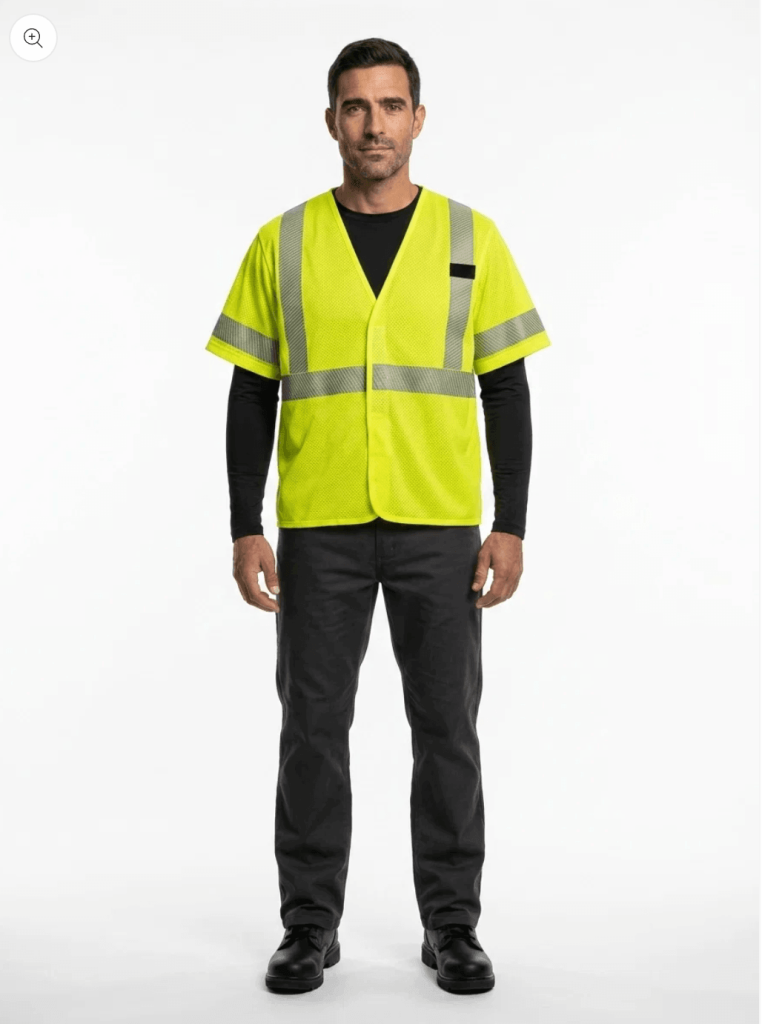
High-visibility clothing can also be important where workers need to be easily seen around vehicles, traffic, or moving equipment. ANSI/ISEA 107-2020 sets performance, design, testing, and labeling criteria for high-visibility safety apparel.
When Is Flame-Resistant Workwear Required?
Flame-resistant or arc-rated clothing is required when the job exposes workers to hazards such as flames or electric arcs and the applicable OSHA requirements call for this protection. Electrical work is a key example.
NFPA 70E is widely used for electrical safety practices and addresses protective clothing and PPE for workers exposed to arc-flash hazards. It should be used alongside applicable OSHA requirements and the employer’s hazard assessment.
NFPA 2112 addresses flame-resistant clothing designed to protect industrial personnel from short-duration thermal exposures from fire, including flash-fire hazards.
Key Regulatory and Industry Standards For Safety Clothing
The following standards are commonly relevant when selecting specialized construction workwear:
- NFPA 70E — Electrical safety workwear and PPE for arc-flash hazards.
- NFPA 2112 — Flash-fire protection workwear.
- ASTM F1506 — Performance standard for flame-resistant and arc-rated textile materials used for protective clothing exposed to electric arcs and related thermal hazards.
- ANSI/ISEA 107 — High-visibility safety apparel requirements, including materials, garment design, performance, and labeling.
Why Proper Safety Workwear Matters
Proper workwear is not simply about meeting a dress code. It is part of a broader hazard-control program designed to reduce the likelihood and severity of workplace injuries.
The scale of construction risk shows why PPE matters. In 2024, construction and extraction occupations recorded 1,032 fatal work injuries, including 370 fatal falls, slips, and trips.
Employers should therefore match workwear to the actual hazards of each task, check that PPE fits correctly, maintain it properly, and replace damaged equipment. Workers should also follow site-specific PPE rules and manufacturer care instructions.
In short, construction workers in the USA must use safety workwear that matches the hazards of their job and meets applicable OSHA requirements and relevant consensus standards. The exact requirements vary by task, work environment, and exposure, so employers should complete a proper hazard assessment before selecting PPE.
